
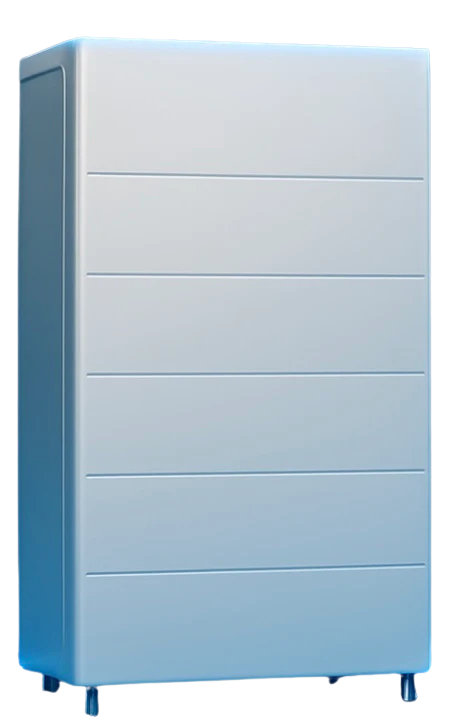
Understanding the EQ4800 Energy System
The EQ4800 is built for one job, to deliver stable three phase power and long duration storage for properties that cannot afford downtime. If you run commercial or industrial operations, manage agricultural assets, or own a large estate in Australia, this system is designed to carry heavy loads without constant babysitting.
Commercial grade three phase output
The EQ4800 delivers true three phase supply, which is critical if you run:
- Motors, pumps, compressors, or workshop machinery
- Cold rooms, HVAC systems, or process equipment
- Large estates with three phase air conditioning, EV chargers, and pools
With balanced three phase output, you avoid the voltage swings and nuisance trips that often come with undersized or mismatched systems. Your equipment starts cleanly, runs smoothly, and experiences less stress on start up and under continuous load.
Long duration battery storage for extended operation
The heart of the EQ4800 is its high capacity battery bank, built to cover long outages and sustained high demand, not just short backup events. That matters if you face:
- Unreliable rural or fringe of grid supply
- Peak tariff periods that punish daytime or early evening usage
- Operations that must keep running after hours or overnight
By storing energy when it is cheaper or when your solar is performing well, then discharging during peak or outage periods, the EQ4800 helps stabilise your costs and keeps your property running when the grid does not.
Heavy load management without compromise
The EQ4800 is engineered to handle high start up and continuous loads. Practical benefits for your site include:
- Reliable operation of large motors and compressors
- Support for simultaneous heavy loads, such as pumps plus refrigeration
- Capability to back up entire properties rather than just a few circuits
Instead of splitting systems or juggling multiple smaller batteries, you work with a single, integrated platform sized for serious demand. For properties planning staged upgrades, the EQ4800 also aligns well with high capacity storage options such as the systems available in our commercial and large home energy range.
Why it suits commercial, agricultural, and premium residential sites
For commercial and industrial owners, the EQ4800 supports predictable operation of production lines, workshops, and building services, which reduces downtime risk and simplifies planning around tariffs.
For agricultural and rural operators, stable three phase output protects pumps, chillers, and shed equipment from harsh starts and voltage fluctuations, which can reduce wear and unplanned repairs.
For large residential estates, the EQ4800 provides whole property backup with quiet, automatic response. You keep EV charging, climate control, and lifestyle loads running, without the noise and upkeep of a generator.
The short version The EQ4800 combines commercial grade three phase power, long duration storage, and robust load handling so your property can run harder and longer with fewer power related interruptions.
Assessing Your Current Energy Usage and Needs
To get the best performance from your EQ4800, you need a clear picture of how your site actually uses power. This section gives you a practical framework so you can see where your energy goes, which loads matter most, and how well the system is currently supporting you.
Step 1: Map your daily and seasonal usage
Start with your existing information. Gather:
- Recent electricity bills across different seasons
- Any interval data or meter reports you have from your retailer
- Solar production data if you have PV installed
Look for patterns such as:
- Times of day when demand is consistently highest
- Days of the week with heavier usage, such as production days or irrigation schedules
- Seasonal shifts, for example higher summer cooling loads or harvest periods
This gives you a baseline to judge whether your EQ4800 is charging and discharging at the right times and whether it is sized correctly for your real usage profile.
Step 2: Identify your peak load requirements
Next, focus on peaks, not just daily totals. List major three phase and single phase loads, such as:
- Motors, compressors, pumps, and industrial machinery
- Cold rooms, chillers, HVAC, and process equipment
- Whole home or estate loads, including EV chargers and pools
For each item, note the key details from the nameplate or documentation, such as supply voltage, phase type, and apparent power rating. Your installer or electrician can help translate this into a realistic peak demand profile so you can see how these loads line up with the EQ4800 output capacity.
Step 3: Define your critical equipment and load priorities
Not every load deserves the same level of protection. To optimise your configuration, group loads into priority levels:
- Priority 1 equipment that must run during an outage, such as key production equipment, essential pumps, cold storage, security systems, and critical home services
- Priority 2 equipment that should run during normal operation but can be limited or cycled during peak tariffs or extended outages
- Priority 3 comfort or lifestyle loads that you can switch off when you need to stretch backup duration
These priorities guide your electrician when assigning circuits, configuring the EQ4800, and, if relevant, integrating with any high capacity storage such as a dedicated commercial and home battery bank.
Step 4: Check how the EQ4800 is currently supporting you
With your usage map, peak profile, and priorities in place, review how the system behaves during:
- Normal grid operation
- Peak tariff periods
- Short and long outages
Note any issues such as frequent generator starts, unexpected battery depletion, or specific equipment that trips or struggles. These observations feed directly into your next step, fine tuning system settings and maintenance schedules so the EQ4800 supports your business or property exactly when it matters most.
Optimizing System Configuration and Settings
Your EQ4800 can do much more than just “run in the background.” The way you configure phases, charging, and integration with solar or generators has a direct impact on reliability, battery life, and power quality at your site.
Balance loads across the three phases
For commercial, agricultural, and estate properties, unbalanced phases are a common cause of nuisance trips and poor performance. Work with your electrician to:
- List all major three phase and single phase loads and which phase or phases they sit on.
- Distribute large single phase circuits so that each phase carries a similar share of the total demand.
- Keep “lumpy” loads apart, for example separate large compressors and pumps across different phases so start up currents are not stacked on one leg.
For commercial and industrial sites, focus on workshop machinery, HVAC, and process gear. For farms, pay attention to irrigation pumps and cold storage. For large homes, check air conditioning, EV chargers, and pool equipment.
Manage charging cycles for battery health
Battery settings should protect lifespan while lining up with tariffs and solar production. Key practices include:
- Set sensible charge and discharge windows that match your retailer tariff periods and typical site usage.
- Use appropriate depth of discharge settings so the system keeps a reserve for unexpected outages rather than cycling to empty every day.
- Schedule slower overnight charging from off peak grid supply if solar is limited, rather than fast charging during shoulder or peak times.
For commercial operators, align charge windows with production shifts. For rural properties, allow for long irrigation runs or harvest operations. For estates, match settings to typical evening and overnight household demand.
Integrate cleanly with solar and generators
The EQ4800 should sit at the centre of your energy system, not fight against it. To achieve that, ensure your installer has:
- Coordinated inverter settings so solar prioritises self consumption and controlled export, then supports EQ4800 charging without overloading circuits.
- Configured generator start logic where used, so the generator only runs when needed and the EQ4800 still carries priority loads.
- Protected critical circuits on the backed up side of the system, with non critical circuits left on grid only where appropriate.
If you plan to expand solar or storage capacity, choose compatible three phase hardware so the EQ4800 can work smoothly alongside high capacity systems such as a dedicated three phase hybrid inverter and battery bank.
Tailor settings to your site type
- Commercial and industrial: Prioritise production lines, compressors, and building services. Use demand limiting or staged start up for big machinery.
- Agricultural and rural: Give pumps, cold rooms, and shed loads top priority. Allow flexible operation for non seasonal equipment.
- Large residential estates: Keep whole home backup for essentials. Place EV charging, pools, and lifestyle loads on controllable circuits that you can limit during outages or peak prices.
Configured this way, your EQ4800 works as a stable, predictable backbone for your site rather than just a backup box in the corner.
Maintenance and Monitoring for Reliable Performance
Your EQ4800 is built for heavy duty work, but like any serious electrical asset it performs best with structured maintenance and active monitoring. A simple plan for checks, updates, and reviews will reduce surprises, protect your equipment, and keep your site online when the grid is not.
Set a regular maintenance schedule
Create a basic timetable so maintenance does not get pushed aside when things get busy. At a minimum, work with your installer or electrician to lock in:
- Firmware updates so the system runs the latest control logic and safety features. These updates often improve charging behaviour, fault handling, and communication with inverters or monitoring platforms.
- Battery health checks including a review of reported capacity, cycle history, and cell or module status. If you notice unusual drops in usable capacity or frequent protection events, escalate early.
- Electrical inspections of terminations, breakers, isolators, and earthing. Heat, dust, and vibration can loosen connections over time, especially in sheds, plant rooms, or coastal environments.
For commercial and agricultural sites, align these checks with other planned shutdowns. For large residential estates, schedule them at times that minimise disruption to comfort loads.
Keep the installation environment under control
The physical environment has a direct impact on reliability. Confirm that the EQ4800 and related equipment have:
- Clean, dry, and well ventilated space with no direct exposure to weather or corrosive atmospheres.
- Clear access for technicians, with labels on isolators and distribution boards that match your single line diagrams.
- Reasonable temperature control since high ambient heat shortens component life and reduces battery performance.
If your site is particularly demanding, for example a hot shed or dusty workshop, consider pairing the EQ4800 with robust three phase hardware such as a dedicated three phase hybrid inverter and battery system that is rated for harsher conditions.
Use monitoring tools as your early warning system
Most EQ4800 installations include a monitoring platform or dashboard. Treat this as your daily and weekly health check, not just a curiosity. Key habits include:
- Review daily load and battery graphs to confirm that charge and discharge patterns still match your operations and tariff windows.
- Watch for repeated alarms or fault codes, even if they clear themselves. Repeated events often indicate wiring, configuration, or environmental issues.
- Track phase balance and peak demand so you can see if new equipment or seasonal changes are creating strain on any one phase or on the system as a whole.
Act quickly on trends, not just failures
The real value of monitoring is early action. Build a simple workflow along these lines:
- Set alert thresholds for low state of charge, high temperature, and repeated inverter or battery warnings.
- Nominate a responsible person on site who receives alerts and keeps a short log of events.
- Escalate to your installer or CEC accredited technician if you see patterns such as regular overnight depletion, unexplained shutdowns, or rising internal temperatures.
Reliable performance is rarely an accident. With structured maintenance, a clean installation environment, and disciplined use of your monitoring tools, your EQ4800 will stay ready to carry critical loads for your business, farm, or estate when you need it most.
Strategies for Cost Efficiency and Energy Savings
Your EQ4800 is a serious asset, and with the right strategy it can do more than keep the lights on. Configured well, it helps you control when and how you buy power, cut generator hours, and reduce wear on your equipment.
Use the EQ4800 to target peak tariff periods
The biggest savings usually come from shifting grid consumption away from peak tariffs. Work with your retailer tariff information and your monitoring data to:
- Charge when power is cheaper, such as off peak or when your solar is producing strongly.
- Discharge through peak windows to cover key loads during high price periods.
- Limit non essential loads in peak times so the stored energy goes to your most important circuits.
For commercial and industrial sites, focus on production shifts that fall inside peak tariffs. For rural operators, target irrigation and cold storage loads that usually coincide with higher prices. For large homes, line up discharge with evening demand when air conditioning, cooking, and EV charging often overlap.
Cut back on diesel generator run time
Generators are helpful, but fuel, maintenance, and noise add up. The EQ4800 can reduce how often you start the generator and how long you run it. Practical steps include:
- Prioritising critical loads on the EQ4800 so only truly necessary circuits call for generator support.
- Using the generator for top up only, for example to recharge the battery during very long outages rather than running it continuously.
- Setting clear start and stop logic so the generator does not fire up for short, unnecessary events.
If you pair the EQ4800 with a high capacity storage and inverter package, such as a dedicated three phase hybrid inverter and large battery bank, you can carry more of the outage on battery and solar, keeping generator hours to a minimum.
Improve overall efficiency and reduce equipment wear
Stable three phase output is a quiet cost saver. When motors, pumps, compressors, and HVAC equipment receive clean, balanced power, they:
- Start more smoothly, with lower inrush stress.
- Run cooler and more consistently under load.
- Experience fewer nuisance trips and protection events.
Over time, this supports longer service intervals and less unplanned repair work, particularly on intensive industrial and agricultural assets. For workshops, that means more reliable compressors, hoists, and machine tools. For farms, it protects irrigation pumps and cold rooms that often run for long periods.
Tighten control of non essential loads
Cost efficiency is not only about tariffs, it is also about discipline. Use the EQ4800 configuration and your distribution board layout to:
- Place lifestyle or comfort loads on circuits you can shed during peak periods or outages.
- Schedule high draw tasks, such as some EV charging or pool filtration, into off peak or high solar periods.
- Review monitoring reports regularly and move or resize loads that consistently create short, sharp peaks.
The more intentional you are with when and where the EQ4800 supplies energy, the more value you pull from every stored kilowatt hour.
Preparing for and Managing Power Outages
When the grid drops, your EQ4800 should step in so calmly that your operation barely notices. That only happens if you plan your loads, train your team, and use the system features the right way. This section shows you how to stretch backup duration and keep critical services online across commercial, agricultural, and large residential sites.
Prioritise essential loads before an outage
The best time to prepare is when the power is still on. Work with your electrician to align your load priorities with your switchboard layout.
- Map Priority 1 circuits, such as production lines, key pumps, cold rooms, security systems, and core home services.
- Place Priority 2 loads, such as non critical machinery, auxiliary sheds, or some comfort loads, on circuits you can manually or automatically shed.
- Keep Priority 3 loads, such as EV charging, pools, and non essential HVAC, on clearly marked breakers so you can switch them off during long outages.
Make sure this structure matches your EQ4800 configuration and any backed up sub boards. A simple printed plan at the switchboard helps staff or family members respond quickly, even if you are off site.
Maximise backup duration during an outage
Once the grid fails and the EQ4800 takes over, your goal is to protect battery capacity for the loads that matter most.
- Turn off Priority 3 loads immediately. This might include non essential lighting, workshop outlets, or lifestyle equipment.
- Review Priority 2 loads and decide what you can cycle or schedule, for example alternating pumps or limiting air conditioning runtime.
- Monitor state of charge through your dashboard so you can adjust operations as the outage continues.
For commercial and industrial sites, this might mean pausing some equipment and keeping only key lines or services powered. For farms, it often means giving irrigation and refrigeration first priority. For large homes, you may maintain fridges, communication, and selected air conditioning while pausing EV charging and pool systems.
Control energy use during extended interruptions
Long outages need a more disciplined plan.
- Set clear thresholds for when to further reduce loads, for example if battery capacity drops below a chosen level.
- Use shift based rules. On commercial or agricultural sites, define which shifts or tasks can proceed under battery only conditions.
- Coordinate with any generator so that if you choose to use it, you run it to recharge the EQ4800 efficiently rather than for low load operation.
If you expect very long outages or heavy critical loads, pairing the EQ4800 with a high capacity storage and inverter setup such as a three phase hybrid inverter and large battery bank can give you extra headroom.
Ensure seamless transition between grid and battery
Automatic transfer is a core advantage of the EQ4800. To keep that transition smooth:
- Confirm switchover behaviour with your installer and run controlled tests during low risk periods.
- Check critical equipment, such as control systems and variable speed drives, to confirm they ride through transfer without faulting.
- Train staff or household members so they understand what indicator lights and alarms mean during a changeover.
This gives you confidence that when the grid fails, your refrigeration, pumps, building services, or home systems keep running with minimal disruption.
Business continuity and peace of mind are built on preparation. With clear load priorities, disciplined energy use, and a well tested EQ4800 configuration, you can treat grid outages as an inconvenience, not a crisis, whether you are running a workshop, a farm, or a large estate.
Planning for Future Expansion and Scalability
Your EQ4800 is a long term asset, so it should be ready for heavier demand, new equipment, and changing tariffs over time. Future proofing is less about guessing the future and more about having a clear plan for how extra load and storage will be added without disruption.
Step 1: Map where your demand is likely to grow
Start with a simple forward plan. List any expected additions over the next period such as:
- New production machinery, compressors, or workshop bays
- Extra irrigation pumps, cool rooms, or processing equipment
- EV chargers, pool upgrades, or extended dwelling space on large estates
For each item, capture basic details from the specification sheet, including supply voltage, phase type, and apparent power rating. This gives your electrician and installer a clear picture of how these additions will sit on your existing three phase backbone.
Step 2: Check spare capacity in your current setup
Use your monitoring platform and recent load history to review:
- Typical and peak demand on each phase
- How close the EQ4800 runs to its rated output during busy periods
- Battery depth of discharge during peak tariff windows and outages
If you see regular operation near the system’s limits, treat that as a signal to plan extra capacity before you connect more heavy loads. For sites with growing needs, some owners pair the EQ4800 with dedicated high capacity storage such as a large three phase hybrid inverter and battery package to create a stronger combined system.
Step 3: Design a staged expansion path
Work with a CEC accredited installer to set a clear staging plan. A typical framework looks like this:
- Stage 1 optimise existing configuration and phase balance, and reserve physical space in switchboards and plant areas for extra hardware.
- Stage 2 add new solar or battery capacity with compatible three phase equipment and confirm that control logic is coordinated with the EQ4800.
- Stage 3 connect new priority loads and update your load priority map and backup strategy.
This approach lets you grow capacity in sensible blocks instead of piecemeal upgrades that create bottlenecks and confusion.
Step 4: Protect uptime during upgrades
Expansion should not put your operation at risk. To avoid disruption, insist on:
- Planned work during low demand periods or scheduled shutdowns
- Temporary supply arrangements for critical circuits while boards or wiring are modified
- Post upgrade testing that covers phase balance, transfer behaviour, and backup performance
For commercial and industrial sites, link expansion works to maintenance windows. For farms, plan around irrigation or harvest schedules. For large homes, time work to avoid peak comfort periods.
Step 5: Keep your system architecture flexible
A scalable EQ4800 setup depends on clear, modular design. That means:
- Using labelled sub boards for different load groups and priority levels
- Choosing compatible inverters and batteries, such as a high capacity hybrid system that can grow alongside the EQ4800
- Keeping updated single line diagrams so future works are fast and low risk
Scalability is about decisions you make now. With a clear forecast of future loads, honest assessment of current capacity, and a staged expansion roadmap, your EQ4800 can grow with your business, farm, or estate without sacrificing reliability.