
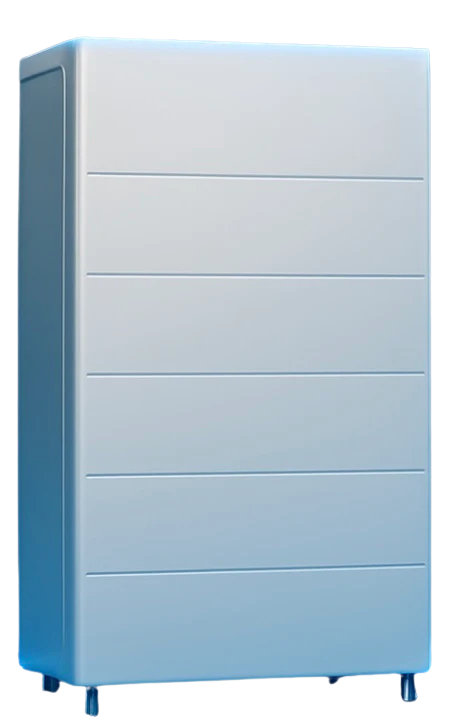
Commercial solar batteries are no longer just for big businesses. For many Australian acreage homes, they now sit at the heart of a smart, reliable and predictable power setup that actually suits how a large family lives.
What is a Commercial Solar Battery for a Home?
In simple terms, a commercial solar battery is a high capacity energy storage unit that works with your solar panels to store excess power for later use. Brands like Tesla Powerwall, Sigenergy and similar systems are often called “home batteries”, but they use commercial grade technology, with higher capacities and smarter controls that suit bigger properties and heavier loads.
On a typical acreage property, a solar battery will:
- Store surplus solar power during the day instead of sending it all back to the grid.
- Feed that stored power into your home in the evening when your family is cooking, showering and using devices.
- Support EV charging so more of your driving is powered by your own solar rather than grid electricity.
- Provide backup power during grid outages, which is especially valuable on semi rural and rural blocks.
Why Acreage Families Are Turning To Solar Batteries
If you own a large home on acreage, with a big family, EVs and constant power needs, your electricity bill is probably one of your biggest monthly expenses after the mortgage. Rising cost of living pressures make every bill cycle sting a bit more.
Commercial style solar batteries address that in several ways.
- Shift power use away from peak rates. Instead of buying expensive evening power from the grid, you can run the home from stored solar energy.
- Stabilise your bills. With a well sized solar and battery system, your bills become more predictable, which helps with mortgage and budget planning.
- Support higher usage lifestyles. Pools, ducted air conditioning, large fridges and EV charging all draw serious power. Batteries help you cover more of that from your own solar generation.
- Enable participation in VPPs. Some commercial grade batteries can join Virtual Power Plant programs, where you are rewarded for sharing stored energy back to the grid under agreed conditions.
How Commercial Solar Batteries Fit Into a Home Solar Power System
Think of your solar setup as a complete energy ecosystem. Solar panels from brands such as Jinko, Canadian Solar and others collect energy. Inverters from companies like SunGrow or Growatt convert that energy into usable power. The commercial solar battery stores what you do not use straight away, then releases it when the family needs it most.
For a busy household on acreage, that means you can run a large home, support EVs and stay committed to green energy, while keeping electricity bills in check and protecting your cash flow for the things that matter, like meeting the mortgage and family goals.
Understanding the Components of a Solar Battery System
A strong solar battery setup for an acreage property is more than just a battery in the garage. It is a group of matched components that need to work together cleanly so you get reliable power, lower bills and smooth EV charging.
Core Components Of A Home Solar Battery System
For a typical Australian acreage home, your system will usually include:
- Solar panels on the roof or shed, often from brands like Jinko, Canadian Solar and similar tiered manufacturers, to capture sunlight.
- Inverter from suppliers such as SunGrow or Growatt, which converts DC power from the panels into AC power your home and EV chargers can use.
- Commercial style solar battery such as Tesla Powerwall, Sigenergy or an equivalent unit, which stores excess solar for use later in the day or at night.
- Monitoring and control hardware that tracks production, storage and consumption so you can see what the system is doing in real time.
- Switchboard and safety gear that connects everything to your home and the grid, with proper protection and compliance.
A well designed system is planned as one package, not a set of random parts.
Popular Battery Types For Large Family Homes
Most modern home batteries that suit acreage properties are lithium based with intelligent software. Systems in the Tesla Powerwall and Sigenergy class are designed for higher loads, frequent cycling and integration with smart tariffs and Virtual Power Plants.
When you compare commercial grade batteries, focus on:
- Usable capacity, so you know how many kilowatt hours you can actually draw each day.
- Power output, so the battery can comfortably handle EV charging, air conditioning and appliances at the same time.
- Warranty and cycle life, to match your long term plans for the property and mortgage horizon.
- Compatibility with VPPs, if you want the option to earn credits for sharing stored power.
Solar Panels And Acreage Suitability
Acreage owners often have more roof or shed space, which gives you more flexibility around panel brands and layout. Panels from Jinko, Canadian Solar and other quality manufacturers can be configured to suit large systems designed for big families and EVs.
Key points to weigh up include:
- Panel efficiency to get solid output across long summer days and softer winter sun.
- System size so you produce enough energy to cover household loads, EV charging and to fill the battery.
- Brand warranties and backing for peace of mind on a long term asset.
Integration With EV Charging
For homeowners with electric vehicles, the link between solar, battery and EV charger is where the real bill savings can sit. A properly specified inverter and battery can be configured so that:
- Daytime charging pulls mostly from live solar generation.
- Evening or overnight charging uses stored battery energy first, then the grid only when needed.
- Smart charge scheduling lines up with solar production patterns and any time of use tariffs.
When you plan the system as a whole, including solar panels, inverter, commercial style battery and EV charging, you create a stable, predictable energy setup that supports your family, your acreage lifestyle and your goal to cut electricity bills while staying committed to green energy.
Government Rebates and Incentives for Solar Battery Installation in Australia
For many acreage families, the upfront cost of a solar battery can feel like the main barrier. This is where federal and state incentives start to make a real difference to your numbers and to the payback period you will see in any solar battery ROI calculator.
Federal Support For Solar And Batteries
At a national level, support often comes through schemes that reduce the effective cost of your solar power system when installed with a battery. These incentives usually apply when:
- Your system is installed by a CEC accredited retailer and installer.
- The solar panels and inverters meet approved product standards.
- The system is connected at an eligible residential property that you own, not a rental or apartment.
The value of federal support depends on factors such as system size, location and compliance with scheme rules. Your installer should clearly show the rebate value as a line item so you see the true net cost that feeds into your ROI calculation.
State Level Battery Incentives
On top of federal support, several states run their own battery specific rebates, low interest loans or bill credit programs. Common patterns for these schemes include:
- Eligibility based on postcode or network area, which often suits semi rural and rural acreage properties.
- Income or property ownership criteria, focused on owner occupiers paying a mortgage rather than investors.
- Technical requirements, such as minimum battery capacity, approved brands and VPP ready systems.
These programs change over time. The safest approach is to treat them as a bonus in your planning, then have your installer confirm current offers before you sign anything.
Application Process And Impact On Upfront Cost
Most rebates and incentives are either:
- Applied at the point of sale, where the installer claims the incentive and passes it on as a discount.
- Claimed by you, where you submit documents such as invoices, proof of residence and product details.
For a busy household, working with an experienced retailer is critical. A good CEC accredited team will:
- Explain which federal government rebate for solar battery and state offers apply to your acreage home.
- Help complete or manage the application, so you avoid delays and paperwork stress.
- Show how each rebate reduces the net installed cost that you enter into your solar battery ROI calculator.
Rebates do not change how your battery performs, but they do change the numbers that matter to your family budget. Lower upfront cost means a shorter payback period, stronger long term savings on electricity bills and a smoother path to the green energy setup you want for your home, EVs and acreage lifestyle.
How to Use a Commercial Solar Battery ROI Calculator
A good solar battery ROI calculator turns all the moving parts of your energy use into clear numbers. For an acreage home with a large family, EVs and higher than average loads, you need to feed in the right details so the result actually matches your day to day life.
Step 1: Gather Your Home Energy Details
Before you open the calculator, collect:
- Recent electricity bills for at least [insert period] to see your average daily and quarterly usage.
- Current tariff rates, including peak, off peak and shoulder if you have time of use pricing.
- EV charging habits, such as how many kilometres you drive and when you usually charge.
These figures let the calculator reflect a real acreage load instead of a small city home profile.
Step 2: Enter Your Solar Panel System Details
Next, input your planned or existing solar setup.
- System size in kilowatts, based on your chosen panels, such as Jinko or Canadian Solar.
- Estimated daily output in kilowatt hours, often provided by your installer.
- Orientation and location, since an acreage property may have more flexible roof or shed options.
The calculator uses this to estimate how much solar energy you can produce to run the home, charge EVs and fill the battery.
Step 3: Add Battery Capacity And Costs
Now enter your commercial style battery details, for example a Tesla Powerwall, Sigenergy or similar system.
- Usable battery capacity in kilowatt hours.
- Battery and installation cost, before rebates.
- Expected battery lifespan in years or cycles, based on the product warranty.
This tells the calculator how much stored energy you can use each day and what you are investing upfront.
Step 4: Include Government Rebates And VPP Income
To see the real numbers, you must include incentives.
- Enter any federal government rebate for solar battery and relevant state rebates as a reduction to the installed cost.
- If you plan to join a Virtual Power Plant (VPP), add expected bill credits or payments as a yearly benefit figure.
This step can make a clear difference to the payback period and long term savings for your family budget.
Step 5: Review Your Results For A Large Family And EV Lifestyle
Once all inputs are in, the calculator will usually show:
- Estimated yearly bill savings, based on reduced grid imports and better use of your solar.
- Payback period, calculated from net system cost, rebates and projected savings.
- Total benefit over the battery life, which reflects your acreage usage, EV charging and any VPP income.
For a large acreage home, pay special attention to how the calculator models evening and overnight use, because this is when your battery and EV charging patterns have the biggest impact on electricity bills and your overall cost of living.
The goal is simple. Use the ROI calculator with accurate, property specific data so you can decide with confidence whether a commercial grade solar battery is the right move for your home, mortgage plan and long term green energy goals.
Key Factors Affecting Solar Battery Investment Returns
When you run the numbers in a solar battery ROI calculator, a few key factors will shape whether the investment suits your acreage home, mortgage plans and family budget. Understanding these before you sign a contract helps you choose a system that fits your lifestyle, not just a headline price.
1. System And Installation Costs
Your total installed cost is more than just the battery. It usually includes:
- Solar panels from brands such as Jinko or Canadian Solar.
- Inverter hardware from suppliers like SunGrow or Growatt.
- Commercial style battery units such as Tesla Powerwall, Sigenergy or similar.
- Mounting, cabling, switchboard upgrades and compliance work.
- Labour from a CEC accredited installation team.
For a large acreage home, you may also need longer cable runs, extra trenching or sub boards for sheds and EV chargers. All of these affect the net cost that you plug into your calculator.
2. Solar Panel Brand And Technology Choices
The panels you choose influence how fast your battery fills and how much grid power you can avoid. When comparing Jinko, Canadian Solar and similar brands, focus on:
- Output and efficiency, to support high daytime loads like pumps and air conditioning while still charging the battery.
- Degradation and warranties, so you know the panels will keep producing solid energy across the lifespan of your battery.
- Suitability for large roofs and sheds, since acreage properties often support bigger systems that can cover EVs and future load growth.
3. Virtual Power Plant (VPP) Participation
Some batteries are approved for VPP programs, which can add bill credits or payments. In an ROI calculator, VPP income is usually entered as a yearly benefit. Key points to consider are:
- Whether your chosen battery model, such as Tesla Powerwall or Sigenergy, is VPP compatible.
- How often the VPP can draw on your battery and what minimum reserve you can set for your own use.
- How any incentives line up with your peak usage periods and EV charging habits.
For a big family, it is important that VPP events do not leave you short during busy evening times, so pay attention to program rules.
4. Maintenance And Service Expectations
Modern solar and battery systems are mostly low touch, but some costs can still appear across the life of the system. In your planning, consider:
- Scheduled inspections or servicing recommended by the installer.
- Potential inverter or component replacements outside warranty.
- Monitoring fees if you choose a premium software platform.
Even if you use placeholder figures in your ROI calculator, it is smart to allow a modest annual amount for maintenance so your forecast stays realistic.
5. Battery Lifespan And Warranty
Expected battery lifespan has a direct effect on long term returns. The longer the battery performs within warranty conditions, the more years of bill savings you can spread your upfront cost across. When comparing options like Tesla Powerwall, Sigenergy and other commercial grade units, look at:
- Warranty term in years and in cycles, and what usage patterns it assumes.
- Guaranteed capacity at the end of the warranty period.
- Compatibility with your planned solar size and EV charging load, so you do not overwork the battery.
For a busy acreage home, a well matched system with strong warranties and a realistic view of maintenance costs will usually produce more reliable returns in the ROI calculator and in real life electricity bills.
Comparison Table of Leading Solar Battery and Solar Panel Options for Acreage Homes
When you live on acreage with a large family, EVs and a serious power load, not every solar and battery combo will suit your needs. The goal is a system that is reliable, VPP ready where possible, and backed by strong warranties, not just a low upfront price.
The table below gives a structured way to compare common commercial style battery and panel options that Australian homeowners often consider for larger properties. Use it as a checklist with your installer, and plug the shortlisted options into your solar battery ROI calculator.
Solar Battery Comparison For Large Family Acreage Homes
| Battery Option | Typical Useable Capacity Range | Power Output Suitability | VPP Readiness | Warranty Style | Best Suited For |
|---|---|---|---|---|---|
| Tesla Powerwall class system | [insert kWh range] | Strong support for whole of home loads and EV charging | Commonly supported on multiple VPP programs | Product and performance warranty to [insert period] | Owners wanting a premium, well known brand with smart app control |
| Sigenergy class battery | [insert kWh range] | Configurable for higher peak loads on acreage properties | Often designed for VPP and advanced energy management | Product and cycle based warranty with defined capacity retention | Tech focused households wanting flexible, scalable storage |
| Other commercial grade home batteries | [insert kWh range] | Varies by model, suitable for medium to large homes | Some models VPP compatible, check product list | Mixed, check warranty terms and installer backing | Owners balancing cost, brand and feature mix |
Key takeaway Use capacity, output and VPP compatibility as your first filter, then match warranty terms to how long you plan to stay in the home.
Solar Panel And Inverter Comparison For Acreage Properties
| Component | Brand Category | Efficiency And Output Focus | Estimated Cost Position | Warranty Character | Acreage Suitability |
|---|---|---|---|---|---|
| Solar panels | Jinko | High output panels suited to larger system sizes | [insert relative cost level] | Product and performance warranty to [insert period] | Good match for big roofs and sheds where you want solid output |
| Solar panels | Canadian Solar | Balanced efficiency and reliability across a wide range | [insert relative cost level] | Tiered product and performance coverage | Owners wanting strong performance with flexible layout options |
| Inverters | SunGrow | High capacity models suitable for larger solar arrays | [insert relative cost level] | Product warranty to [insert period] | Large single or multi phase acreage homes with higher daytime loads |
| Inverters | Growatt | Wide range of residential inverters with hybrid options | [insert relative cost level] | Product warranty to [insert period] | Owners wanting flexible pairing with different battery brands |
How To Use This Comparison In Your Own Planning
To align these options with your energy goals and mortgage budget, use a simple framework.
- Set your targets such as [insert target bill reduction], [insert target payback period] and EV charging coverage.
- Shortlist 2 to 3 panel brands and 2 battery options that match your acreage load and roof space.
- Ask your CEC accredited installer to price each combination, including rebates and any VPP incentives.
- Enter each combo into your solar battery ROI calculator using the same usage data, so you compare like with like.
The right choice is the system that fits your family’s lifestyle, risk comfort and long term plans for the property, not just the one with the lowest advertised price.
Conclusion and Next Steps Towards Energy Independence
You have seen how commercial style solar batteries, strong panel brands and the right inverter setup can turn an acreage property into a reliable, low bill, green energy home. For a large family juggling a mortgage, EV charging and rising cost of living, the next step is to move from “interesting idea” to a clear, numbers based decision.
Why The ROI Calculator Matters For Your Family Budget
A solar battery ROI calculator is not a gimmick. It is a way to pressure test the system against your real life. When you plug in your:
- Current electricity usage and tariff structure
- Planned solar panel size and output
- Battery capacity and installed cost
- Federal government rebate for solar battery and any state support
- Expected VPP credits and EV charging habits
you get a realistic view of payback period and long term savings. That makes it much easier to compare the investment with other priorities such as extra mortgage repayments or home upgrades.
Practical Next Steps For Acreage Homeowners
- Clarify your goals. Decide what matters most, for example [insert target bill reduction], [insert target payback period], or a certain share of EV charging powered from solar and battery.
- Collect your data. Gather recent bills, tariff details and a simple summary of your family’s daily and seasonal power use.
- Shortlist equipment. Narrow down to a small list of batteries such as Tesla Powerwall class or Sigenergy class, paired with panel brands like Jinko or Canadian Solar and inverters such as SunGrow or Growatt.
- Confirm rebates. Have a CEC accredited retailer explain which government rebate on battery and any local offers apply to your property, and how they reduce your net cost.
- Run multiple ROI scenarios. Use the calculator with different system sizes and VPP participation settings so you can see how small tweaks change the payback and long term benefit.
Designing A Future Proof, Green Energy Home
For acreage properties, the smart move is to think a few steps ahead. Choose solar, battery and EV charging that can scale with growing kids, extra vehicles or new appliances. Prioritise:
- Quality hardware with strong warranties from trusted brands.
- VPP ready batteries so you can join programs when they suit you.
- Clear, transparent pricing from installers with proven experience on large homes.
You deserve predictable bills and a system that just works. Use the ROI calculator, leverage government rebates and partner with a skilled, accredited installer so your commercial style solar battery becomes a practical step toward long term energy independence for your home, your EVs and your family’s future on the property.